The Skin Advice That’s Going Viral—and What a Dermatologist Actually Thinks
Jane LaCroix
If you care about your skin, sometimes all the options and opinions out there can become a bit overwhelming. Every week, there’s a new treatment promising tighter skin or another viral warning telling you your favorite procedure is secretly ruining your face. And peptides? What are those? Somewhere between the TikTok trends and the biohacking obsession, it can be hard to figure out what’s actually backed by science.
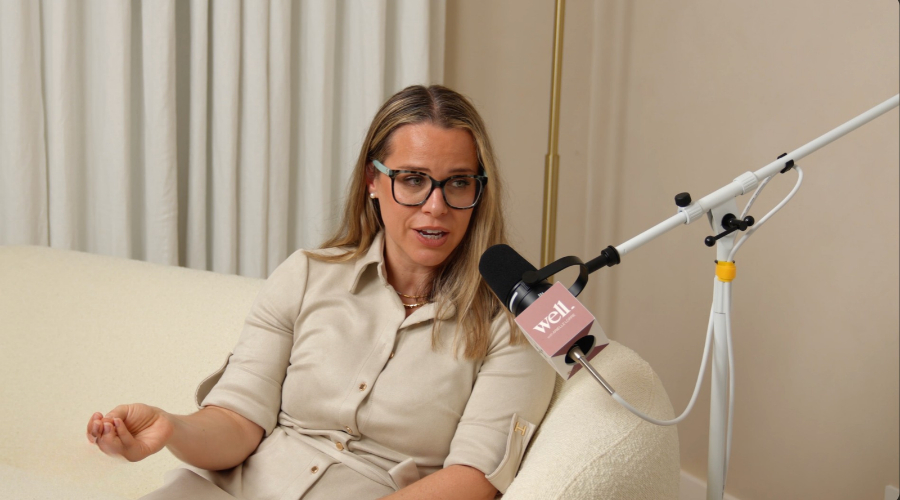
On this episode of GlowLab, board-certified dermatologist Dr. Sheila Farhang (from Derm Approved) lays it all out by introducing the idea of longevity dermatology—a more holistic approach that looks beyond wrinkles and focuses on keeping skin healthy at the cellular level for years to come. From the truth about GLP-1 facial fat loss to why radiofrequency microneedling has become one of the most misunderstood treatments in aesthetics, she explains where the real risks lie and why technique often matters more than the treatment itself.
Dermatologist Dr. Sheila Farhang Breaks Down Viral Skin Treatments
Longevity dermatology is about your skin’s future
For years, anti-aging skincare has focused on correcting what you can already see (think fine lines, dark spots, etc.). Longevity dermatology flips that thinking. “It’s not only anti-aging and making your lines go away or stimulating collagen with certain retinoids or lasers, but it’s actually like on a cellular level,” Dr. Farhang says. Rather than relying on brand-new treatments, she says it’s about using the tools dermatologists already have more intentionally to optimize how skin ages.
That means looking beyond the surface. According to Dr. Farhang, longevity dermatology focuses on “decreasing inflammation.” She continues, noting, “We’re promoting activating the cells, decreasing the dead cells, the zombie cells, improving your skin barrier, and just making your cells work better.”
Basically, skin health is deeply connected to what’s happening inside the body. Hormones, chronic inflammation, nutrition, and even your gut microbiome all play a role in how your skin ages. In Dr. Farhang’s ideal world, dermatology appointments would spend just as much time discussing lifestyle as prescriptions.
GLP-1 face isn’t inevitable—but how you lose weight matters
As GLP-1 medications become more common, so have conversations about “Ozempic face.” Dr. Farhang says the medication itself isn’t the whole story. How quickly you lose weight (and how your treatment is managed) can make a significant difference.
That’s one of the reasons she often recommends microdosing for patients who don’t need dramatic weight loss. It’s a slower, more sustainable approach that minimizes side effects. “If they’re like wanting to lose 15 pounds, why suffer and why lose that all in one month because you will actually get the consequences of the facial fat loss and things like that way worse than slowing it down,” she says.
She also points to emerging research suggesting there’s more going on than rapid weight loss alone. “There’s also studies to support that the actual GLP-1 targets facial fat specifically,” she says, explaining that facial fat pads are what create youthful contours and natural structure.
Still, not everyone experiences the same changes. Genetics and facial anatomy play a major role in how someone looks after losing weight. Some people appear more sculpted, while others may notice sagging or a gaunter appearance. That’s why Dr. Farhang encourages patients to prioritize muscle maintenance, eat enough protein, and lose weight gradually. “If you start earlier in your journey of weight loss, and you do it slow, you won’t have a lot of those issues,” she says.
Your provider might be the problem
Radiofrequency microneedling has developed a controversial reputation online, with stories linking treatments like Morpheus8 to facial fat loss. Dr. Farhang says the technology itself isn’t the villain—it’s how it’s being used. “I’m not going to sit here and pretend like radiofrequency microneedling or Morpheus specifically is not a treatment without side effects,” she says. “But…it’s the user.”
Dr. Farhang says the biggest mistakes happen when providers use needles that penetrate too deeply or apply too much energy. The facial fat layer sits around four millimeters beneath the skin. And if a treatment reaches that depth, it can destroy fat that should have been left alone. “100 percent the reason why some of these issues happen with the facial fat loss is they were going too deep,” she explains.
That doesn’t mean the treatment should be written off altogether. In fact, it’s one of the procedures she performs most often because of its ability to tighten skin, stimulate collagen, improve acne scars, and treat concerns that more superficial lasers can’t reach. In her own practice, she says, “we’ve probably done thousands of patients. And I don’t even think we’ve had one patient that came in and was like, I have facial fat loss from this treatment.”
Dr. Farhang doesn’t want you to judge a treatment based on viral horror stories. Judge it by the experience of the person performing it. A skilled provider understands how to customize the depth and technique to your anatomy.
You don’t have to avoid RF microneedling if you have melasma
For people with melasma, heat has long been considered the enemy. That’s why many avoid treatments like RF microneedling altogether, worried they’ll trigger more pigmentation. “Did you know that you don’t have to be nervous about radio frequency if you have melasma?” Dr. Farhang points out. While she emphasizes that “it’s not a melasma treatment by [any] means,” she explains that RF microneedling works differently than many people assume. Instead of concentrating heat on the surface of the skin, the energy is delivered deeper without necessarily aggravating pigmentation.
Technique, once again, is key. Dr. Farhang says depth matters, explaining that “if we are at least one millimeter in depth…the melasma doesn’t get worse.” In her practice, she’s even seen unexpected improvements in certain patients with vascular skin concerns, noting that RF microneedling may also help support lymphatic flow and reduce inflammation.
Don’t assume the newest treatment is automatically better
XERF may be one of the buzziest treatments in aesthetics right now, but Dr. Farhang isn’t rushing to declare it the future of skin tightening. While she sees promise in the technology, she says it’s still too early to know how it compares to more established treatments. One misconception she wants to clear up is that XERF somehow exists outside the radiofrequency conversation. “It is radio frequency,” she says. “You can’t hate Morpheus and love radio frequency. It’s the same technology.”
Unlike RF microneedling, XERF delivers radiofrequency energy through the surface of the skin, meaning there’s no need for needles or downtime. Dr. Farhang says it also appears to have smarter built-in feedback that helps prevent overtreatment, making it more user-friendly and potentially safer. But because it doesn’t reach the deeper layers of the skin, she’s still waiting to see how meaningful the long-term results will be. “I think it’s really new,” she says. “I think if you’re in your 30s, 40s, fine, but…if you’re expecting some craziness, let’s see the data,” she says.
To hear the full conversation with Dr. Farhang, listen to GlowLab wherever you get your podcasts.
Read More
- Why Chasing Every Wrinkle Could Be Aging You Faster
- The Little Lifestyle Upgrades Lauryn Bosstick Swears By
- A Celebrity Esthetician Says These Small Summer Skincare Tweaks Make the Biggest Difference

Trending Products


Leave a Comment
Suggested Articles

Inside the Influencer Industry: Bran Flakezz Gets Real With Alexis Oakley About Money, Managers, and Burnout
Nov 9, 2026 Career & Money



Leave a Reply