Thinking About Fat Grafting? Read This Before You Book the Consult
Maggie Ekberg
Cosmetic procedures are having a full identity crisis right now. After years of overfilled cheeks and “pillow face” turning into facial chaos, plenty of people are rethinking what they actually want from injectables and looking for options that feel a little more natural. One procedure currently dominating aesthetics conversations? Fat grafting. The American Society of Plastic Surgeons even named it one of the leading aesthetic trends of 2026.
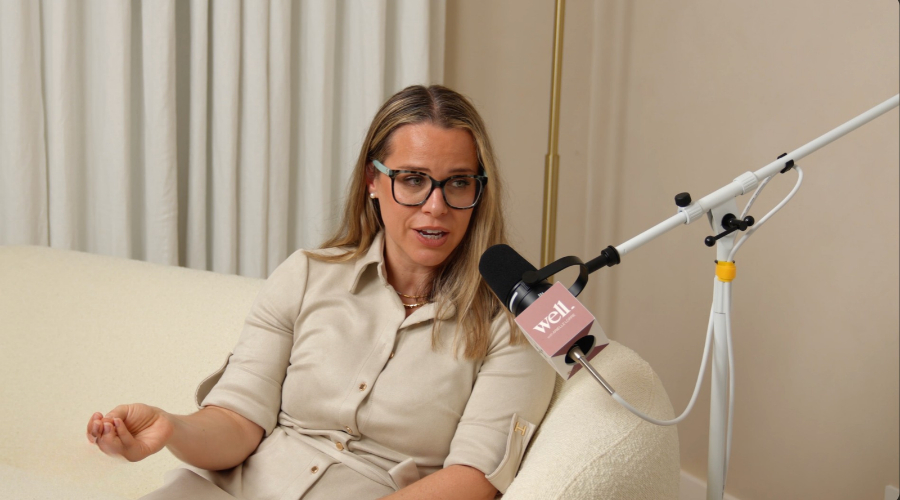
On Glow Lab, host Susan Yara sits down with board-certified facial plastic surgeon Dr. Monica Kieu to explain why everyone suddenly wants their own thigh fat in their face. Whether you’re Ozempic-deflated, filler-fatigued, or just curious why your favorite influencer suddenly looks suspiciously refreshed, here’s the cheat sheet.
Fat grafting is basically you donating to yourself
“What you’re doing is, in a nutshell, just taking fat from somewhere in the body and placing it somewhere else,” Dr. Kieu explains. “The beauty of it is it’s all you. So there’s no allergy, there’s no risk of rejection, there’s no foreign material, and it’s permanent.”
There are three types of fat that do different jobs
Not all fat is the same, and not all of it gets used for the same thing. Dr. Monica breaks it down:
- Macro fat (the bigger parcels) is used for BBLs, breast augmentation, and bigger volume situations
- Micro fat (smaller particles) is used for the face: temples, forehead, lips, cheeks, anywhere precise
- Nano fat (the newest, emulsified into the SVF) is packed with stem cells and growth factors, and can be microneedled into the skin or scalp for hair restoration and skin texture
The nano fat is the breakthrough everyone’s talking about. It’s not really filling anything; it’s just delivering a payload of growth factors to your skin to rejuvenate it from the inside.t. It’s not really filling anything, it’s just delivering a payload of growth factors to your skin to rejuvenate it from the inside.
Only 40 to 70 percent of the fat actually survives
“Not all the fat that I graft is going to survive, and that’s just biology,” Dr. Kieu says. About 40 to 70 percent will take, depending on your blood supply, the area being injected, and how well your body neovascularizes (basically, builds new blood vessels around the new fat). The areas with the best survival rate:
- Under eyes
- Cheeks
- Temples
Fat in high-movement zones like the lips doesn’t last nearly as long, which is why it’s not the go-to for plump pouts.
You need way less fat than you think
“What I’m taking is probably the size of an espresso cup, like a little shot glass,” Dr. Kieu says. Even thin patients have a little pocket of fat to pull from somewhere, whether that’s the abdomen, inner thighs, bra fat, or even behind the knee. So no, you’re not getting BBL’d in reverse.
The fat remembers where it came from
“Fat, when you take it from somewhere, for example, say we’re taking it from the abdomen and putting it in the under eyes, it retains the genetics of the abdomen,” Dr. Kieu says. “So it still thinks it’s in the stomach. And so it does respond to caloric changes, meaning if you’re gaining a lot of weight, if you’re losing a lot of weight, it will move with it.” Drop 30 pounds on a GLP-1 a year later and your face will deflate right along with it. Five to ten pound fluctuations are fine, but the sweet spot is doing fat grafting once your weight is genuinely stable.
The healing arc is six months and not linear
Patience is the whole vibe. Dr. Kieu breaks it into three phases:
- Weeks 1-2: Swollen, bruised, looking overfilled. You will panic. Wear makeup over the bruises and ride it out.
- Months 1-3: The fat is settling. Some of it is being absorbed, some of it is staying.
- Months 4-6: Your final result. This is when you assess and decide if you want a touch-up.
Flying, salty meals, and stress can all cause swelling fluctuations during the healing process. Totally normal.
The risks worth knowing
The two big ones to ask your surgeon about:
- Overfilling. Once it survives, it’s there. Removing it requires actual surgical excision or very careful off-label Kybella treatments, which is why finding a surgeon who doesn’t overcorrect “just in case” matters so much.
- Vascular occlusion. Rare but serious. The right surgeon will use a blunt cannula (not a needle) and inject in tiny linear threads to minimize the risk.
Lumps and bumps from too-superficial injection can happen, but they usually resolve on their own.
The Renuva and Allē-Clé conversation
Not ready to do the full thing or don’t have enough fat to harvest? Two newer options on the market:
- Renuva: the matrix only (no actual fat cells). It’s the framework that encourages your own fat to grow in. More subtle, less volume.
- Allē-Clé: relatively new, has actual fat cells plus the matrix. More volume than Renuva, but it’s still early and not a ton of long-term data yet.
Real fat grafting is still the move for major volume changes. Renuva and Allē-Clé are the “tweak” options.
Pricing is more reasonable than people think
“My price range is around $5 to $12,000,” Dr. Kieu says. “On the lower end, that’s like one very specific targeted area, like the under eyes. And then you go up depending on how many areas that you’re doing.” That’s middle-of-the-road for Beverly Hills and Newport Beach, so expect some variation depending on your city, the surgeon’s experience, and whether you need general anesthesia.
The mid-40s sweet spot
If you’re in your 40s and feeling like you’re in aging purgatory (not ready for a full facelift, but also not recognizing yourself in the mirror), Dr. Kieu says this is the prime moment for fat grafting. “You’re going to get a great response because you’re healthy, you have a normal weight, you’re going to maintain your stable weight, and you’re motivated.”
As always, do your own research, find a board-certified facial plastic surgeon who specializes in the face specifically, and book a consult before you decide on anything. The right doctor will tell you what you actually need, not just sell you the procedure.
Listen to the full episode on Glow Lab with Susan Yara, available wherever you listen to podcasts.
Read Next
- Why Some ‘Healthy’ Habits May Be Hurting More Than Helping, According to a Doctor
- Topical Estrogen Is Everywhere Right Now—Here’s How to Know If It’s Actually Right for You
- The Breakfast Mistake That’s Wrecking the Rest of Your Day, According to a Dietitian

Trending Products


Leave a Comment
Suggested Articles

Inside the Influencer Industry: Bran Flakezz Gets Real With Alexis Oakley About Money, Managers, and Burnout
Nov 9, 2026 Career & Money



Leave a Reply