6 Financial Truths That Hit Different When You Didn’t Grow Up With Money
Maggie Ekberg
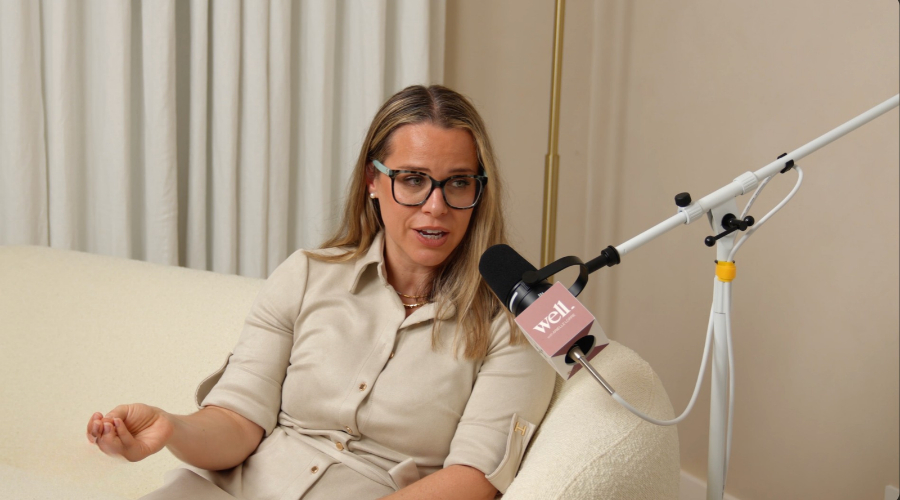
April is Financial Literacy Month and on She’s So Lucky, host Les Alfred is kicking off a full investing series with probably the most honest solo episode she’s done. Alfred grew up lower income, was a first-gen college student, first-gen entrepreneur, and first-gen “true corporate girlie” in her family. She nearly lost everything during the 2008 recession while she was still in college and spent years watching people around her have financial stability she didn’t understand how to build.
Now she’s made her first angel investment and is on a mission to get more women, especially women who didn’t grow up with money talk at the dinner table, into the rooms where the checks get signed.
Here’s what she’s learned along the way.
Investing Advice for Beginners: What to Know Before You Have Money
Don’t wait until you have money to learn how to manage it
“If you try to wait till you have money to learn how to manage it, you’re already too late and you’re already on your way to losing it,” Alfred says.
She opened a 401(k) at 20 years old as a college intern without even understanding what it was. Someone said the words “employer match” and “free money” and she signed up for everything she could get her hands on during that three-month internship. That one account has been compounding for over 15 years, is now worth about four times what she put into it, and could potentially fund her retirement on its own. One decision she barely understood at 20 changed her entire financial trajectory.
Pay attention to who isn’t stressed about money and ask why
When Alfred was in college during the recession, barely knowing if she could afford the next semester, she started getting curious about the classmates who weren’t stressed. “What do your parents do? Where do your parents work? How did they get into that?” she says.
That curiosity led her to her first corporate job, which led to her first retirement account, which led to everything else. The lesson: instead of spiraling about what you don’t have, get nosy about how the people who have it got there. That information is free and it compounds just like interest does.
You might already have the brain for investing and not even know it
Alfred was a social media manager making $50K a year when she asked her startup founder what the contingency plan was if people couldn’t attend events in person. This was spring 2019. She got reprimanded for “not believing in the vision.” Then COVID happened.
“I’m asking more difficult questions than these investors who are cutting you multimillion dollar checks,” she says. “And I’m a wee little social media manager. Maybe I’m onto something.” If you’ve ever been the person in the room asking the uncomfortable but obvious question, that instinct is exactly what good investing requires.
Stop chasing deals and start positioning yourself to write the checks
“I’m tired of begging for deals and I’m tired of begging for shots,” Alfred says. “I want to be the one making the decision and cutting the check and being able to say who gets to do what.”
Alfred has been on every side of this. Laid off from companies that saw her as disposable. Stuck in organizations she didn’t want to be in. Building a content business where most of the revenue still depends on someone else saying yes. Every single time, the lesson was the same: the power dynamic changes completely when you’re the one with the money.
“What it really takes is knowing the right people, having just the right amount of knowledge, and just like a little bit of capital,” she says. “You can take a little bit of something and it can grow and it can compound.”
Your first investment doesn’t have to be a massive check
Alfred recently made her first angel investment and is upfront about the fact that it was a small one. “I know if you’re in a position where you don’t have any, I get it. I have been there. It’s still a little shaky for me, but we’re working through it,” she says.
The way Alfred sees it, that check was basically paying for a mastermind or a business coach. Getting to sit on the same cap table as experienced investors, learning how they evaluate deals, watching how decisions actually get made from the inside—that’s an education you can’t get from a book or a podcast. And if the company does well financially on top of that? Even better.
Investing is an act of hope and right now hope is radical
“The people who have us feeling this way want us to feel that way,” Alfred says about the current wave of hopelessness around the economy and the future. “There is a potential future and it can be really bright.”
Studies show that women who invest tend to outperform men because they’re more thoughtful, more patient, and more likely to reinvest in their communities. “When women have more money, communities are healthier, wealthier, and stronger,” she says.
Investing in your future, even when everything feels uncertain, is one of the most powerful things you can do. Because as Alfred puts it, “When I think about the old lady version of myself who is living in that ideal world, she ain’t broke.”
Listen to the full episode on She’s So Lucky with Les Alfred, available wherever you listen to podcasts.
Read Next
- 4 Manifesting Practices That Have Nothing to Do With Vision Boards or Hustle
- Caroline Baudino Says This One Thing Changed How She and John Fight About Money
- 6 Money Truths That Decide Whether Your Relationship Survives Real Life

Trending Products


Leave a Comment
Suggested Articles

Inside the Influencer Industry: Bran Flakezz Gets Real With Alexis Oakley About Money, Managers, and Burnout
Nov 9, 2026 Career & Money



Leave a Reply