How to Actually Build Generational Wealth When You’re Starting From Scratch
Maggie Ekberg
Millennials and Gen Z collectively hold just 12 percent of the country’s wealth. Meanwhile, baby boomers—who make up the same percentage of the population—are sitting on over $85 trillion. If you’ve ever felt like the financial deck was stacked against you before you even got to the table, the math says you’re not imagining it.
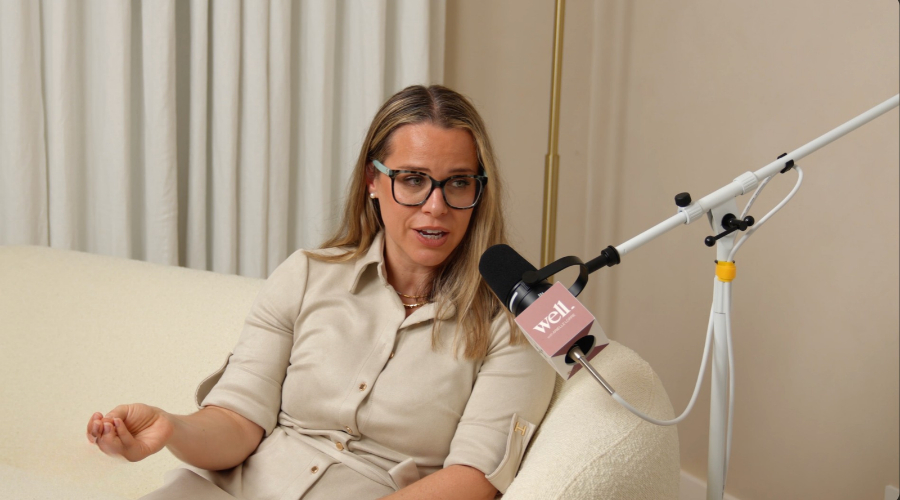
On She’s So Lucky, host Les Alfred sits down with Vivian Tu, the Wall Street analyst turned internet financial powerhouse behind Your Rich BFF, and they get into what it actually takes to build wealth that lasts longer than one generation. Whether you’re still figuring out how to save or you’re making good money but somehow still feel behind, here’s what she wants you to know.
Making money and building wealth are not the same thing
“You can make a lot of money,” Tu says. “If you’re spending like it’s going out of style, that doesn’t actually do anything in terms of your bloodline, your family tree.”
In other words, having a high income and actually building wealth are two completely different things. One is money coming in. The other is what you’re able to keep, grow, pass down, and use to buy yourself actual freedom later. A lot of people look rich online while still living paycheck to paycheck behind the scenes.
Making money pays for your life right now. Wealth is what still exists after the direct deposits stop.
Generational wealth disappears in three generations if you don’t architect it
There’s a saying Tu references: from shirt sleeves to shirt sleeves in three generations. The first generation builds it. The second generation saw the grind and respects it but doesn’t feel the same urgency to replicate it—because they don’t have to. The third generation has never seen the struggle at all and that’s where things fall apart. “This is where you see the crash out burnouts,” she says. “This is where you see the failure to launches.”
How to prevent it:
- Nobody should assume they’re getting a massive inheritance
- Set up family funds earmarked for specific things like education or starting a business—not blank checks
- College funds for everyone, but they have to actually get into a program (traditional college, trade school, cosmetology, whatever)
- “As soon as you start making a handout situation and raising entitled kids, it’s game over,” Tu say
The purchase equation that changes how you spend
Tu has a formula for deciding whether something is worth buying: calculate your hourly take-home pay after taxes. Then divide the price of whatever you’re eyeing by that number. If you make $25 an hour and the pants are $100, you’re trading four hours of your life for those pants. “Don’t have any other pants, sure,” she says. “But if you got a dozen other pairs that look kind of similar, no.” It works because most people can’t visualize money but everyone knows what four hours of work feels like.
Every designer bag after the first one was chasing a feeling that never came back
There’s a very specific kind of delulu that happens after your first big “I made it” purchase. You think the next thing is going to hit the exact same way. The next bag, the next watch, the next luxury splurge. Except…it usually doesn’t.
For Tu, it was a black Prada bag she saved up for during her Wall Street days. Buying it felt euphoric because it represented something bigger than the bag itself. “Every bag I bought after that was chasing that same feeling,” she says. “And I’ve never had it again. Not once.”
That realization completely changed how she spends money now. Experiences still feel worth it to her. Travel, dinners, memories, time with people she loves. But expensive stuff for the sake of expensive stuff? “[It] had a diminishing marginal return.”
The reframe:
- Experiences compound. Stuff depreciates.
- If you’re buying something mainly to impress other people, it’s probably not going to feel the way you think it will.
- “Wealth to me means buying freedom, buying time, buying opportunities,” Tu says.
Always have your own bank account. Always.
“If somebody can feed you, they can starve you,” she says. She recommends the “yours, mine, and ours” structure: one joint account for shared expenses like rent, groceries, and utilities, and individual accounts for everything else. “Both of us work hard. So you’re not going to tell me what I can and cannot buy and I don’t want to have to tell you that either.”
And it goes deeper than independence. “99 percent of domestic violence cases include financial abuse,” she points out. “If you don’t have the money to run, you don’t.”
Have the estate planning conversation even if it’s awkward
Estate planning sounds like something only rich people need. It’s not. It’s basically just making sure nobody has to guess what you would have wanted if something happens to you. Tu breaks down the basics:
- A will so your family doesn’t end up in court fighting over who gets what
- A trust protects your money and assets from people who shouldn’t have access to them
- Power of attorney so someone you trust can make decisions for you if you can’t make them yourself
- A healthcare directive so your wishes are clear if you’re ever in a medical situation where you can’t speak for yourself
“You are not the richest or the brokest person who’s ever done an estate plan,” she says. “You are not the simplest or the most complex. People have done it before you and they will do it after you.”
And if trying to bring this up with your parents immediately turns into them accusing you of manifesting their death? Apparently that’s normal too. “My dad was like, ‘So you’re praying on my downfall. You think I’m going to die,’” she says. “I’m like, I’m not plotting. I’m just trying to ask what’s going on.”
Become what you’re looking for
Tu says people DM her constantly asking how she found a rich husband. “First off, I’m the breadwinner,” she says. “Second off, I’ll tell you. I found a rich husband by making myself the main plot line.” She went to the University of Chicago, got the Wall Street job, built her own financial stability, and happened to meet her hubby in those same circles. “I was able to put myself in the proximity of a rich man because I was a rich woman,” she explains. The same applies to career opportunities, friendships, deals—all of it. “When you start acting like you deserve the job, you get the job.”
Listen to the full episode on She’s So Lucky with Les Alfred, available wherever you listen to podcasts.
Read Next
- 6 Financial Truths That Hit Different When You Didn’t Grow Up With Money
- Tori Dunlap’s No-BS Answers to Modern Money Problems
- A Financial Expert Says Stop Stressing About Lattes and Start Negotiating Your Car Insurance

Trending Products


Leave a Comment
Suggested Articles

Inside the Influencer Industry: Bran Flakezz Gets Real With Alexis Oakley About Money, Managers, and Burnout
Nov 9, 2026 Career & Money


Leave a Reply