Sandy Brockman and Dr. Alexis Griffin Explain Why Your Butt Isn’t Growing
Maggie Ekberg
You did the squats and bought the ankle bands. You’ve spent enough time on the hip-thrust bench to start receiving mail there. Yet somehow your quads are thriving while your butt remains committed to minding its own business.
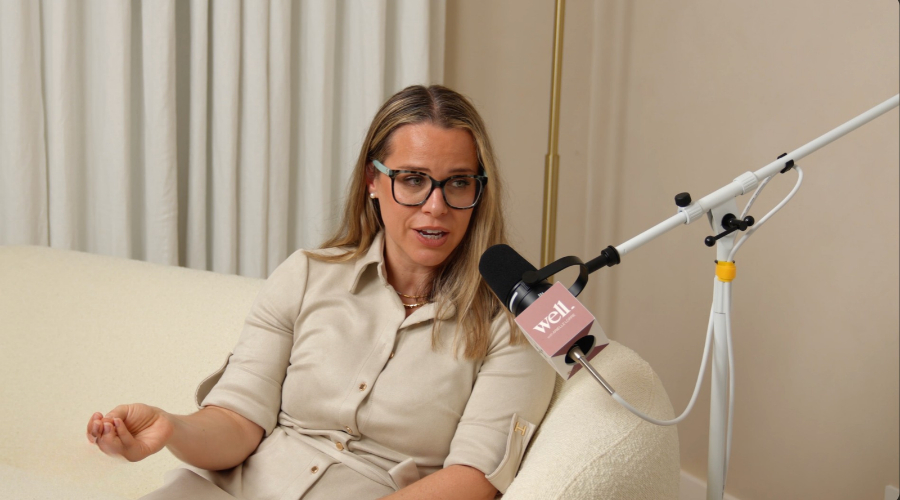
Sandy Brockman sees the same frustration all the time. “Every woman that comes to me wants glutes,” the Lifted host says. But adding another kickback to leg day may not solve the problem. In a conversation with physical therapist and movement specialist Dr. Alexis Griffin, Brockman digs into why the body often sends the work somewhere other than the muscle you’re trying to grow.
Sandy Brockman and Dr. Alexis Griffin Explain Why Your Glutes Aren’t Growing
Your body found an easier way to do the exercise
Your body’s main priority is getting through the movement. It doesn’t particularly care whether the result matches the workout plan saved on your phone. “Your body loves you, and it’s going to figure out a way to move you,” Brockman says. “But it doesn’t always find the right way.”
If your glutes aren’t contributing enough, nearby muscles are happy to pick up the slack. Griffin says she often sees the lower back take over during squats, while Brockman regularly works with women whose quads or hamstrings dominate lower-body exercises. That may explain why an exercise labeled “glutes” leaves your thighs shaking or your back irritated. “If it’s easier to move through your lumbar spine, then you’re going to tend to do that more.”
You’re squeezing without getting a real stretch
The top of a glute bridge feels productive. Your butt is clenched, the band is fighting for its life, and the burn has arrived right on schedule. Griffin says that contraction is only half of what the muscle needs. “If you’re going to use a muscle, meaning contract it and shorten it, you have to lengthen it,” she explains.
That means your glutes need to move through both ends of the exercise. During a squat or hinge, they lengthen as your hips travel back before shortening again as you stand.
For anyone who swears by the burn from those tiny pulses, that’s the catch. “Women live in the pulse and burn too much,” Brockman says. She prefers full range of motion, especially when time is short. On a hinge, that means lowering until you reach the deepest stretch you can control, then driving back up and squeezing at the top—no cutting the rep in half.
Your hips may be stuck before the rep begins
During her CrossFit days, Brockman knew how to build muscle and trained hard, but her lower back kept taking over while her glutes stayed completely “shut down.” A physical therapist eventually traced the problem to her wildly tight hip flexors, the muscles at the front of the hips.
“If you can’t even get your hip into extension, how do you expect to use your glute?” she recalls him asking. That’s the part people miss. When the front of your hips stays locked up, your glutes can have a harder time reaching the position they need to fully do their job. Griffin’s go-to fix is a couch stretch paired with a glute squeeze, so you’re opening the tight side and waking up the sleepy side in the same move.
To try it, kneel with one knee close to a couch or wall and prop that foot up behind you. Plant the other foot in front like you’re setting up for a lunge, then keep your torso tall and your hips facing forward. Squeeze the glute on the kneeling side for three seconds, relax, and repeat without letting your hip shift. The squeeze is what gives the stretch more purpose. Instead of simply melting into the position, you’re teaching the glute to switch on as the front of the hip opens up.
You added weight before you owned the movement
Loading an exercise can help build muscle, but more weight only helps when the intended muscle can handle it. Otherwise, you may be strengthening the same compensation that kept your glutes out of the movement in the first place. “Tempo is so underrated for women,” Brockman says. “Everyone’s piling weight on them constantly. I’m like, strip off all that weight.”
A lighter Romanian deadlift performed slowly may do more for your glutes than a heavier one your lower back has to rescue. Griffin also emphasizes keeping the hips high during the hinge and stopping when you reach the strongest stretch you can control. Then you stand and squeeze. The rep may not look as impressive from across the gym, but your glutes have a better chance of doing the work instead of outsourcing it.
Want to hear the full conversation? Listen to Lifted, available wherever you get your podcasts.
Read Next:
- The Unexpected Lesson Sami Clarke Learned After Seven Days of Silence
- It’s Not Too Late to Turn Your 2026 Resolutions Around—Here’s How
- The ‘Biggest Lie’ Women Over 40 Are Told About Their Bodies, According to Kim Kardashian’s Trainer

Trending Products


Leave a Comment
Suggested Articles

Inside the Influencer Industry: Bran Flakezz Gets Real With Alexis Oakley About Money, Managers, and Burnout
Nov 9, 2026 Career & Money



Leave a Reply